

Biofortification Market to Surge to USD 368.79 Million by 2034, Driven by Rising Nutritional Security Initiatives
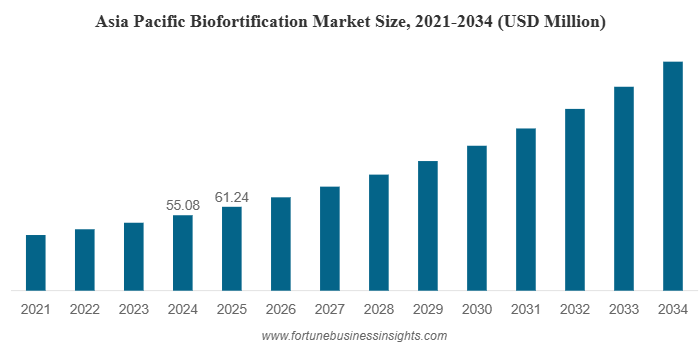
Biofortification Market Size
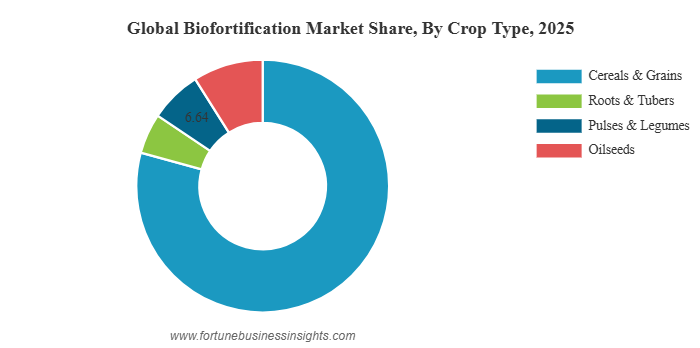
Biofortification Market Share
Global Biofortification Market projected to grow at 11.19% CAGR through 2034, fueled by micronutrient deficiency solutions and crop enhancement demand.
The global biofortification market size was valued at USD 142.70 million in 2025. The market is projected to grow from USD 157.85 million in 2026 to USD 368.79 million by 2034.”
PUNE, MAHARASHTRA, INDIA, February 11, 2026 /EINPresswire.com/ -- The Biofortification Market Size is poised for significant expansion over the next decade, evolving as a crucial strategy to address global micronutrient deficiencies and enhance food system security. According to a latest research report by Fortune Business Insights, the global biofortification market size was valued at USD 142.70 million in 2025 and is expected to reach USD 368.79 million by 2034, exhibiting a robust compound annual growth rate (CAGR) of 11.19% during the forecast period. — Fortune Business Insights
Biofortification involves enhancing the nutritional content of staple crops through conventional breeding, agronomic practices, or genetic engineering techniques to increase levels of essential micronutrients such as zinc, iron, and vitamins. This approach aimed at reducing “hidden hunger” — the widespread prevalence of micronutrient deficiencies — is gaining traction across global agricultural and public health segments.
Biofortification Market Overview
The global market for biofortification is driven by an increasing focus on improving the quality and nutritional value of food crops, particularly in regions where micronutrient deficiencies are prevalent. Biofortified crops provide an effective and sustainable solution to malnutrition by enriching staple foods like rice, wheat, maize, and sweet potatoes with essential nutrients during plant growth. Fortune Business Insights underscores the role of biofortification in addressing hidden hunger and contributing to long-term public health outcomes.
The rising consumer interest in functional nutrition, enhanced food systems security, and government and institutional support initiatives further bolster the market landscape. Both public and private sectors are investing in research collaborations and seed development to extend the commercial adoption of nutrient-enriched crops, which in turn propels overall market growth.
Get a Free Sample of this Report:
https://www.fortunebusinessinsights.com/enquiry/request-sample-pdf/biofortification-market-114975
Top Companies in Market
• Bayer CropScience (Germany)
• Corteva Agriscience (U.S.)
• Syngenta AG (Switzerland)
• BASF SE (Germany)
• KWS Saat SE & Co. KGaA (Germany)
• Rijk Zwaan (Netherlands)
• East-West Seed (Thailand)
• HarvestPlus (India)
• Seed Co Limited (Zimbabwe)
• NuTech Seed (U.S.)
• Mahyco (Maharashtra Hybrid Seeds Company Ltd.) (India)
Biofortification Market Trends
Key market trends in the biofortification space include the expansion of high-zinc and high-iron staple food varieties. These nutrient-enriched crops are increasingly recognized for their potential to improve health outcomes and reduce chronic health conditions linked to micronutrient deficiencies. As awareness grows, staple foods fortified through biofortification are being embraced widely across low- and middle-income regions where traditional supplementation and fortification methods face logistical limitations.
Another notable trend involves heightened investment in seed improvement and breeding programs by major agricultural companies and research institutions. These efforts aim to enhance crop yields while ensuring improved nutrient profiles, making biofortified seeds more accessible to farmers and food producers worldwide.
Biofortification Market Growth Factors
Several growth factors underpin the accelerating biofortification market:
• Rising micronutrient deficiencies: The global burden of conditions such as anemia and zinc deficiency continues to rise, prompting a stronger emphasis on nutrient-enriched crop strategies that can deliver long-lasting nutrition improvements in vulnerable populations.
• Food security and public health initiatives: Governments and international organizations are increasingly incorporating biofortification into nutrition policy frameworks and public health interventions aiming to improve food quality and reduce the prevalence of malnutrition.
• Technological advancements: The adoption of advanced breeding techniques and genetic engineering enhances efficiency in developing biofortified crop varieties, enabling more effective targeting of micronutrient enhancement and broader adoption across diverse agricultural landscapes.
• Private sector investments: Seed companies and agribusiness stakeholders are investing in research and commercialization strategies, creating new opportunities for nutrient-dense crop varieties to enter commercial markets and increase availability to farmers and consumers alike.
Ask for Customization:
https://www.fortunebusinessinsights.com/enquiry/customization/biofortification-market-114975
Biofortification Market Segmentation Analysis
The biofortification market is segmented across several key parameters, each reflecting unique demand dynamics:
• By Crop Type: The market includes categories such as cereals & grains (e.g., rice, wheat, corn, millets), roots & tubers, pulses & legumes, and oilseeds. The cereals & grains segment holds a dominant position due to its staple role in diets across developing regions and extensive adoption in biofortification programs.
• By Target Nutrient: Segmentation by nutrient type includes zinc, iron, vitamins, amino acids, and others. Zinc remains a leading targeted nutrient segment, reflecting global efforts to combat widespread zinc deficiency, while vitamins and iron segments also play a significant role due to their importance in preventing anemia and immune system challenges.
• By Technology: The market is divided into conventional breeding, agronomic practices, and genetic engineering. Conventional breeding continues to lead due to broad acceptance and less regulatory complexity relative to genetically modified solutions, while genetic engineering is expected to expand rapidly as adoption barriers decrease and regulatory frameworks evolve.
KEY INDUSTRY DEVELOPMENTS
Recent developments underscore the growing momentum of the biofortification market:
• In August 2025, HarvestPlus Solutions launched a pioneering Neutral Mark symbol to help consumers and businesses identify authentic biofortified seeds and products, ensuring nutritional integrity and supporting market confidence.
• In September 2024, HarvestPlus partnered with Cargill to launch the NutriHarvest project, a multi-year initiative aimed at improving global food security and empowering smallholder farmers across India, Kenya, Tanzania, and Guatemala.
The Biofortification Market is expected to continue its upward trajectory through 2034, underpinned by growing global awareness of nutritional deficiencies, supportive policy frameworks, technological advancements, and cross-sector collaboration between public and private stakeholders. With expanding adoption of nutrient-dense crops and strategic industry developments, the market is positioned to play a pivotal role in addressing global nutrition challenges.
Read Related Reports:
Fertilizers Market Size, Share, Growth
Molecular Breeding Market Size, Share
Ashwin Arora
Fortune Business Insights™ Pvt. Ltd.
+1 83390 92966
sales@fortunebusinessinsights.com
Legal Disclaimer:
EIN Presswire provides this news content "as is" without warranty of any kind. We do not accept any responsibility or liability for the accuracy, content, images, videos, licenses, completeness, legality, or reliability of the information contained in this article. If you have any complaints or copyright issues related to this article, kindly contact the author above.
